Guide
Best Time to Visit New Zealand South Island
Choose the best South Island travel season for daylight, weather risk, crowds, road conditions, prices and alpine access.
Save it for later on this device or print a clean planning copy.
Quick facts
- Best time
- February-March, November-early December, April for calmer travel
- Recommended duration
- season planning
- Budget range
- Low: 90–160 EUR/person/day · Mid: 180–320 EUR/person/day · Comfort: 380+ EUR/person/day
- With kids
- Yes
Orientation
Match the season to the activity
For a first loop, I would consider February or March. That is an editorial starting point, not a promise of low prices, empty trails or dry weather.
Budget bands are rough whole-trip costs per person per day for two adults sharing a car and room, including food and running costs. Add flights and expensive activities; check actual offers for your dates.

I would first decide whether a long alpine hike is essential. If so, let that destination guide the season. Valley walks and cities are easier to fit around conditions.
Alex Travels · TravelHighlights.io
Keep planning
Choose the next useful step
Jump straight to the next relevant part of your trip.
Map
Guide map
- Best Time to Visit New Zealand South Island
Mini itinerary
- 1Choose priorities: coast, valley walks, alpine hikes or winter sports.
- 2Compare the season with access, daylight and actual accommodation offers.
- 3Adjust daily plans to current forecasts and road conditions during the trip.
Planning notes
Avoid These Common Mistakes
Treating a month as a forecast
The West Coast, southern lakes and Mackenzie Basin can have different conditions on the same day.
Assuming shoulder season means cheaper everywhere
Compare real room and rental prices for your dates. Winter-sports towns can have demand outside summer too.
Assuming spring means open hiking routes
Snow and seasonal closures can limit alpine walks. Check the specific destination with DOC.
Travel planning answers
Travel-season questions
When would you go for a first loop?+
February or March are reasonable starting points for combining lakes, coast and walking. Then check access for your main activity and actual prices.
Is winter worthwhile without skiing?+
It can suit a shorter trip with cities, lakes and flexible valley walks. Long mountain drives and hikes need much more willingness to change the plan.
Is April always cheaper?+
No. Season alone does not set the price. Compare the vehicle and every overnight stay together, taking account of holidays and events on your dates.
Worth it / Skip if
Worth it
Compare seasons before booking flights, especially when hiking, skiing or beach days are central to the trip.
Skip if
If your dates are fixed, stop searching for an ideal month and adapt destinations and daily plans to that season.
With kids
When school holidays determine your dates, settle accommodation and the vehicle first and keep alpine outings weather-dependent.
Budget range
Low
90–160 EUR/person/day
Mid
180–320 EUR/person/day
Comfort
380+ EUR/person/day
Guide details
Practical take
The official climate overview distinguishes coastal conditions from the alpine interior. Do not choose a month using a national temperature average alone. For a first loop, I would compare February and March, then check the main walks and excursions.
How it fits the route
Summer, from December to February, brings long days but stronger demand. Spring and autumn can suit a less tightly scheduled loop; they do not promise snow-free mountain tracks. In winter, I would shorten the route and spend more days in the same accommodation.
Typical trade-offs
If one particular hike is the main reason for travelling, check its seasonal access first with the Department of Conservation. For Milford Sound, road conditions are another deciding factor. A route with several essential alpine stops is less flexible than one you can also enjoy beside lakes and in towns under cloud.
Save it for WanderSpend
Give each weather-dependent day an alternative nearby. Keep booking terms with the outing so you know what can be changed and by when. Refresh the forecast close to the actual day.
Where to go next
Adapt the South Island itinerary to your actual month. Use the driving guide for remote and winter stages.
Sources & Last updated
Last updated: 2026-06-29
Sources
- Tourism New Zealand: Official destination, route and seasonal planning context(checked: 2026-06-29)
- Department of Conservation: Official national park, track and conservation area visitor context(checked: 2026-06-29)
- Waka Kotahi NZ Transport Agency: Official road, safety and driving information context for New Zealand(checked: 2026-06-29)
- Tourism New Zealand – Climate and weather: Regional climate differences, summer high season and snow in alpine South Island areas. Month selection remains editorial advice.(checked: 2026-09-07)
For your trip planning
Travel Services
Useful services for your trip. Choose what fits your plans.
Affiliate offers: We may earn a commission if you book. External search forms load only when opened, sharing data with Travelpayouts and the provider.
Nearby / next stop
ROUTE · ROADTRIP
Essential
Last updated 2026-06-29
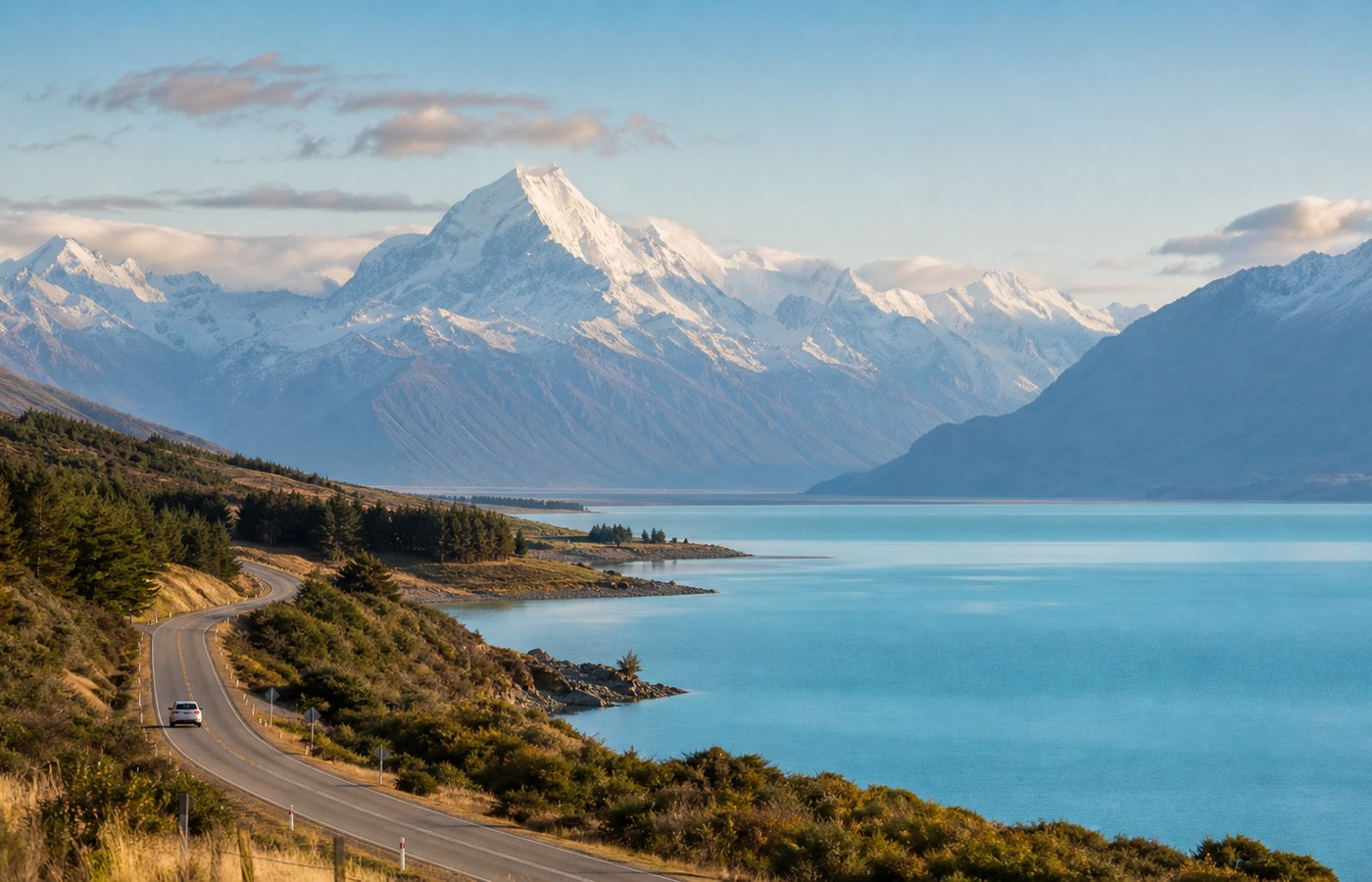
New Zealand South Island Itinerary: 10, 14 and 21 Days
Three South Island routes with overnight stops: ten days in the south, two weeks with more mountain time, or three weeks extending to Abel Tasman.
Read guide →
PRACTICAL · BUDGET
Essential
Last updated 2026-06-29
New Zealand South Island Budget Guide
Car and rooms or a campervan? Compare total costs, split shared expenses correctly and keep a separate allowance for booked excursions.
Read guide →